Low Voltage Garden Lighting Installation Guide for Long Island Homeowners

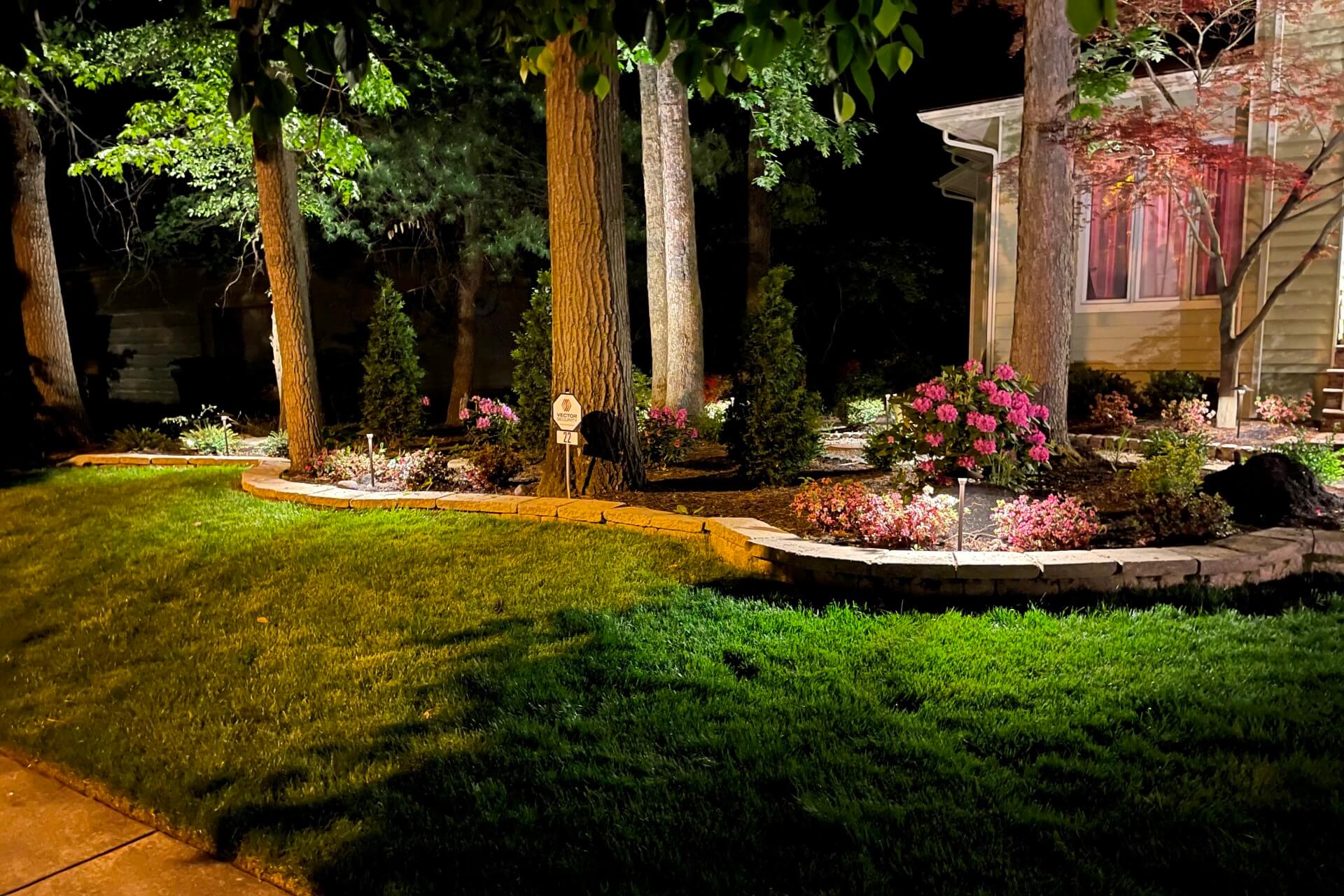
Thoughtful outdoor lighting ideas, project highlights, and practical guidance for Long Island homes.
Low Voltage Garden Lighting Installation Guide
Long Island nights deserve better than dim patios or dark pathways. This guide walks homeowners in Huntington, Nassau County, and Suffolk County through planning and installing low voltage garden lighting—while showing where Oasis Lighting Design can make the process faster, cleaner, and safer.
What Is Low Voltage Garden Lighting?
Low voltage systems use a transformer to reduce standard 120V household power down to a safer 12V before it reaches the fixtures. That lower voltage:
- Reduces shock risk for families, pets, and guests.
- Enables smaller, discreet fixtures that blend into planting beds.
- Supports LED efficiency, meaning lower energy use and longer runtimes.
Benefits for Long Island Properties
- Safety and navigation: Even, glare-free path lighting for brick walks in Huntington or flagstone patios in Northport.
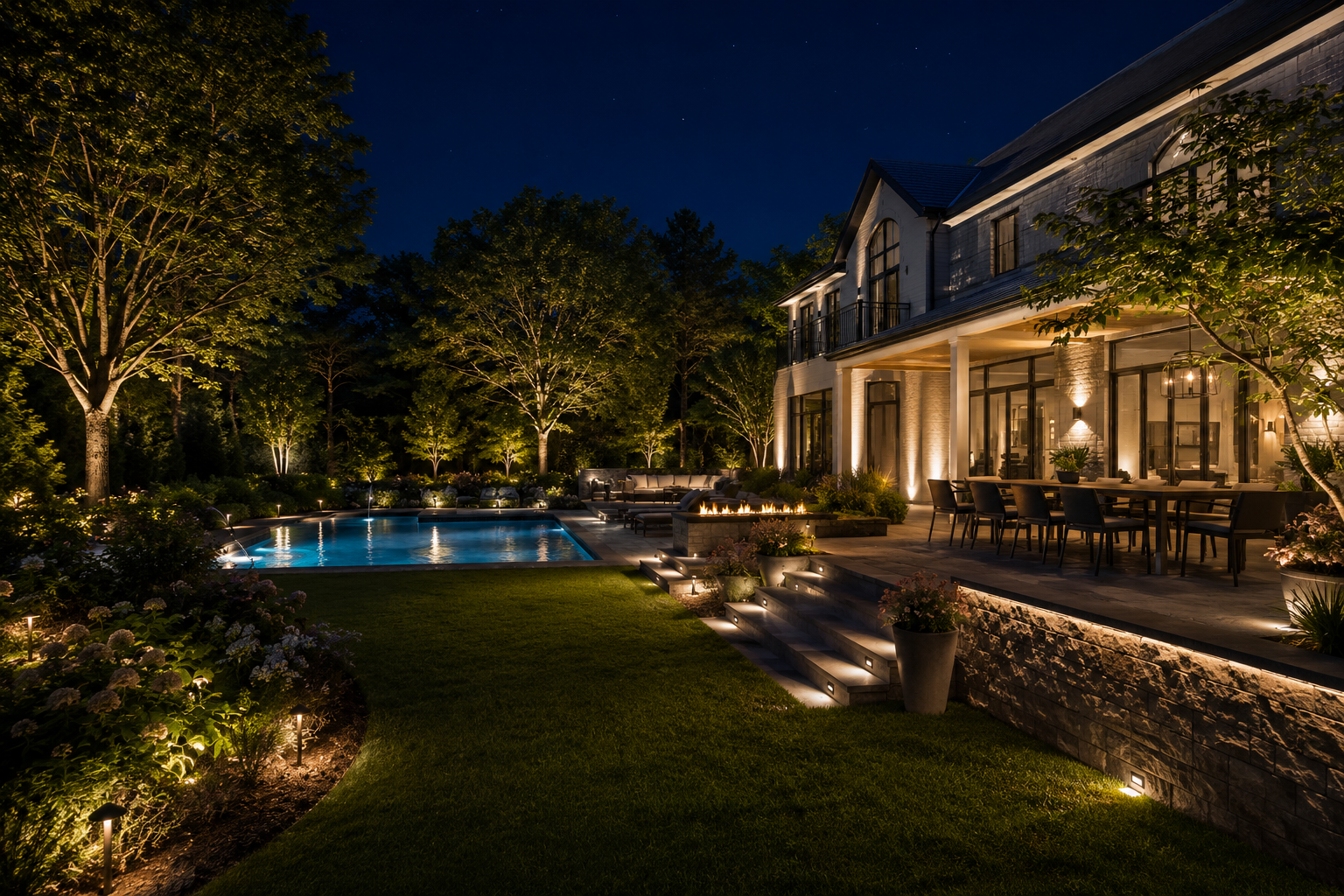
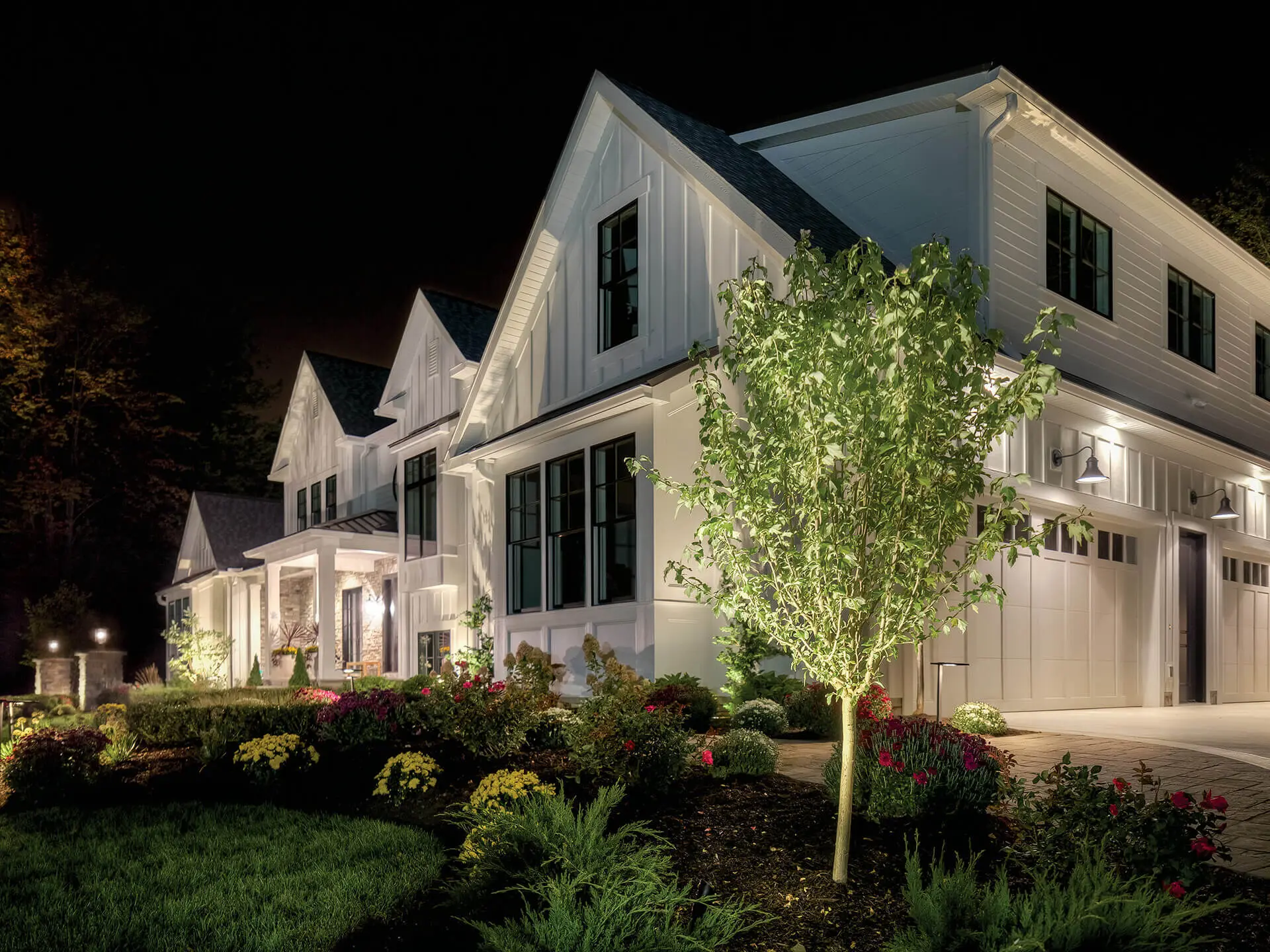
- Curb appeal: Warm uplighting on specimen trees and facades boosts resale value across Nassau and Suffolk County neighborhoods.
- Energy savings: LED low voltage fixtures draw a fraction of traditional halogen systems.
- Flexibility: Add zones over time—front entry now, pool surround later.
- Resilience: Marine-grade brass or powder-coated aluminum stands up to salt air and coastal moisture.
Plan the Layout First
Walk the property at dusk and note primary views:
- Entries, driveways, and walkways that need clear wayfinding.
- Architectural features (columns, gables) that deserve accent light.
- Plant focal points like river birches or ornamental grasses.
- Outdoor rooms—kitchens, pergolas, and seating areas—that benefit from layered light.
Sketch a simple map showing fixture positions, beam directions, and cable routes back to the transformer. Keep long runs in mind to avoid voltage drop.
Choose the Right Fixture Types
- Path lights: Gentle pools of light along walks and garden edges without glare.
- Spotlights/uplights: Aim at trees, stonework, or art; use narrower beams for tall evergreens and wider beams for broad canopies.
- Well lights: Flush options for driveways or lawn areas that get mowed.
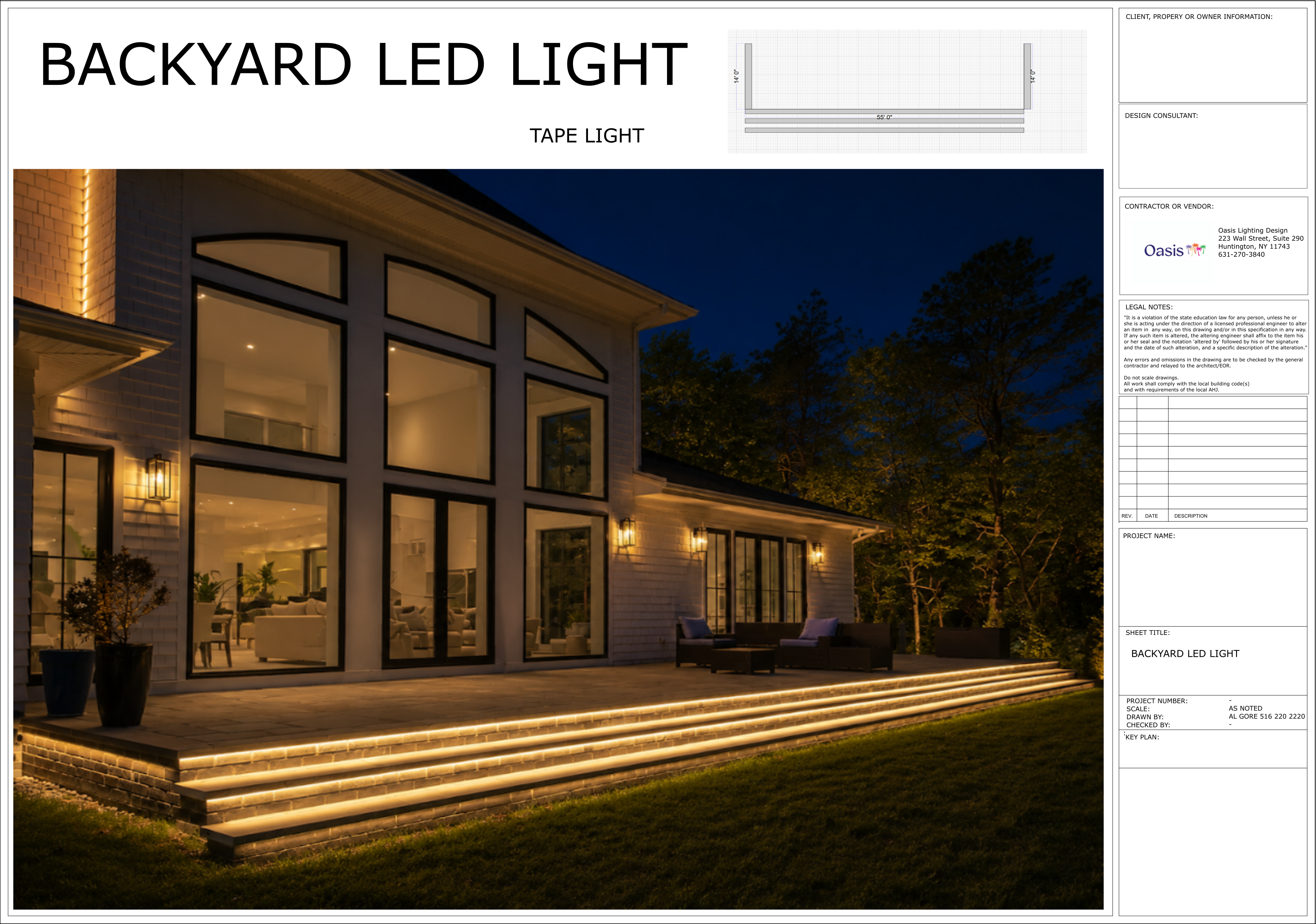
- Hardscape and deck lights: Tuck under capstones, steps, or railings for safer transitions.
- Wash lights: Soften wide walls or hedges with even illumination.
Oasis Lighting Design carries Long Island-tested brands and color temperatures that stay consistent season after season.
Transformer and Cable Basics
- Transformer sizing: Total the VA/wattage of all fixtures, add 20–30% for future growth, and select a multi-tap unit (12–15V) to combat voltage drop on longer Suffolk County runs.
- Placement: Mount near a GFCI outlet, elevated off the ground, and sheltered from sprinklers or splash zones.
- Cabling: Use direct-burial low voltage cable; run main trunks along bed edges, then tee into shorter leads for each zone.
- Voltage drop control: Keep high-watt fixtures closer to the transformer, use heavier gauge wire on long pulls, and balance loads across multiple taps.
Installation Overview
- Stage fixtures: Place them according to the plan; confirm sightlines from the street and main indoor windows.
- Run cable: Lay primary runs first, leaving slack at each fixture location. Keep 6-inch depth in beds; go deeper or conduit across walkways.
- Make connections: Use gel-filled, outdoor-rated connectors to keep moisture out.
- Set the transformer: Mount, land the conductors, and program the timer or smart controller.
- Night aiming: After dark, fine-tune beam angles to avoid hot spots, shadows on steps, or glare into neighbors’ yards.
Common Mistakes to Avoid
- Undersized transformers with no room for future zones.
- Too-shallow cable that gets cut during spring mulch edging.
- Mixing color temperatures (2700K vs 3000K) on the same sightline.
- Over-lighting paths with tall glare; under-lighting steps.
- Skipping nighttime aiming, which leaves facades flat and trees uneven.
Maintenance Tips
- Wipe lenses seasonally; salt spray and pollen dim output.
- Re-tighten and re-seal connections each spring.
- Re-aim fixtures as hedges fill in or trees leaf out.
- Inspect for nicks in cable after aeration or bed edging.
- Update timers for daylight shifts or add photocell/smart control for set-it-and-forget-it reliability.
When to Hire a Professional
DIY is possible for small front walks, but larger Long Island properties benefit from professional design and voltage balancing:
- Complex layouts with multiple runs and long wire distances.
- Trees that need layered uplighting without glare into neighboring homes.
- Coastal environments that demand corrosion-resistant fixtures.
- Integration with existing pools, outdoor audio, or smart home control.
Oasis Lighting Design handles design, trenching, safe wiring, and after-dark aiming—serving Huntington, Garden City, Smithtown, and the rest of Nassau and Suffolk County.
Internal Links You May Need
- Landscape Lighting Services
- Outdoor Lighting Service Areas
- Huntington, NY Outdoor Lighting
- Garden City, NY Outdoor Lighting
Ready to Light Your Garden?
Schedule a consultation or night demo with Oasis Lighting Design and see how clean, low voltage lighting can elevate your property.
Request an Estimate · Explore Lighting Services · Call (631) 270-3840
FAQ
What counts as low voltage garden lighting?
It’s a 12-volt system fed by a transformer that steps household power down before sending it through outdoor-rated cable to landscape fixtures.
How big should my transformer be?
Add up fixture wattage/VA, include 20–30% headroom, and choose a multi-tap transformer to manage voltage drop on longer cable runs.
How deep do I bury cable?
Six inches in beds on Long Island is common; go deeper or use conduit where there’s foot traffic, pets, or edging tools.
Do LEDs still need maintenance?
Yes—clean lenses, keep connectors dry, and re-aim seasonally as plants grow.
When should I call a pro?
If you want balanced effects, safe wiring, and expansion-ready design—especially on larger Nassau or Suffolk County properties—bring in Oasis Lighting Design.