The Complete Guide to Sports Court Lighting on Long Island

Thoughtful outdoor lighting ideas, project highlights, and practical guidance for Long Island homes.
The Complete Guide to Sports Court Lighting on Long Island
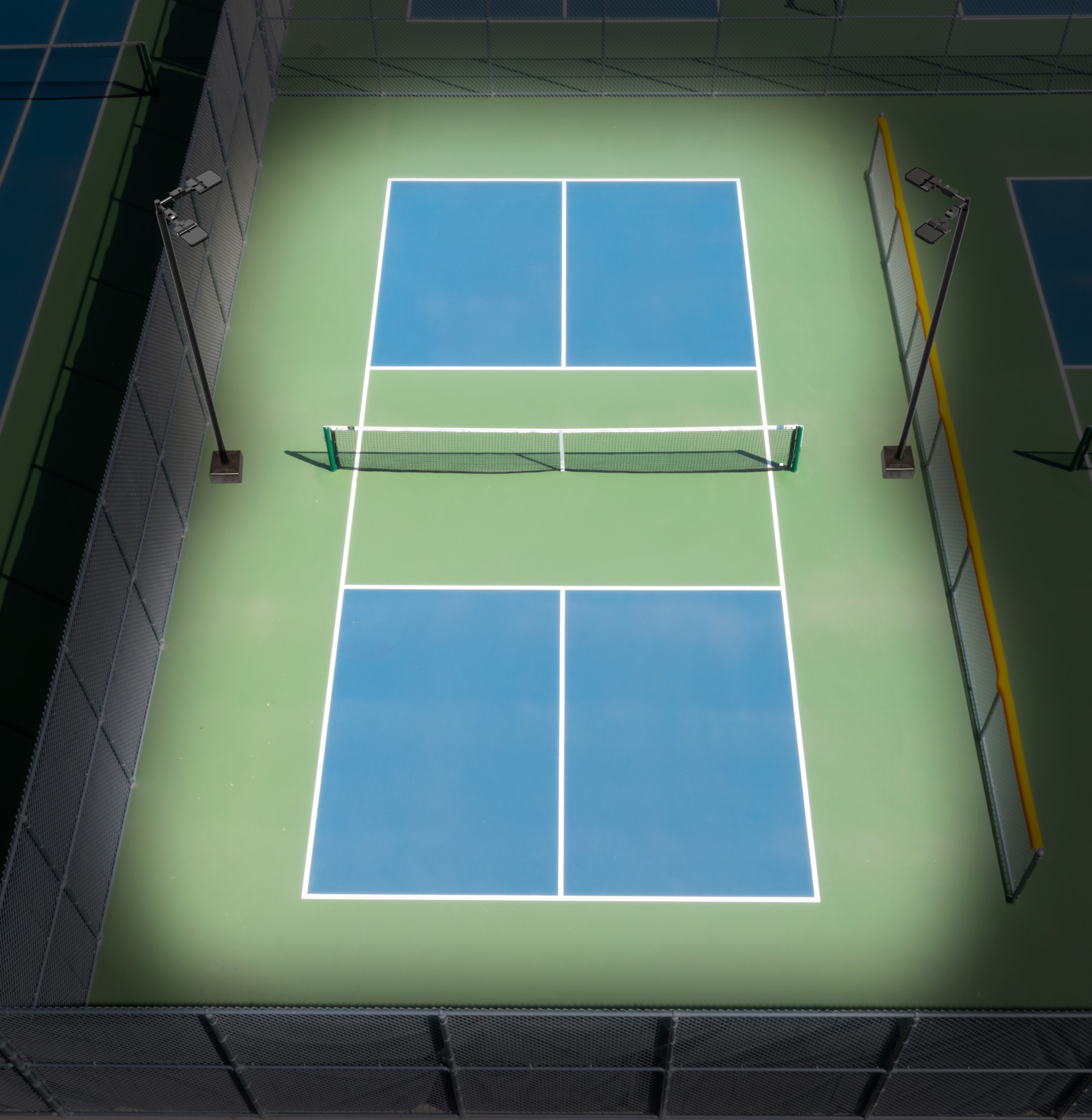
Sports court lighting has become a bigger conversation for Long Island homeowners because backyards are no longer limited to patios and planting beds. Many properties now include pickleball courts, basketball courts, hitting areas, tennis courts, and other private recreational spaces that need to stay usable after sunset.
At Oasis Lighting Design, we approach sports lighting the same way we approach premium outdoor lighting across the property: the system has to perform well, respect the lot, and look intentional at night. A good sports lighting setup is not just about brightness. It is about layout, comfort, glare control, and the way the court fits into the rest of the home.
What Sports Court Lighting Systems Include
Most sports court lighting systems are built around a few core parts:
- Poles that place the fixtures high enough to spread light across the playing surface
- LED fixtures that deliver the actual output, beam control, and visual tone
- Wiring and conduit that safely bring power to the system
- Controls that manage switching, zones, timers, and different use modes
Each part affects the final result. Even strong fixtures can underperform if the poles are spaced poorly, the aiming is rushed, or the controls are not designed around how the space is actually used.
Popular Court Types on Long Island
The most common private and recreational sports lighting projects we see on Long Island include pickleball courts, tennis courts, and basketball courts. We also see more multi-use backyard court lighting projects where one surface has to support several types of play.
Each court type has different demands. Pickleball usually needs tighter glare control because the court is compact. Tennis needs stronger support for longer sightlines. Basketball often has to balance visibility around the hoop with the fact that the court is highly visible from the house, driveway, or patio.
How Lighting Design Impacts Play
Lighting design changes the way the court feels in real use. Pole spacing affects how evenly light is distributed. Pole height changes how comfortable the beams feel from different angles. Fixture aiming determines whether the court stays readable without throwing harsh glare toward the players or nearby homes.
If you want to understand those design decisions in more detail, our pole height and layout guide explains how mounting height affects performance, and our spacing and coverage guide breaks down why overlap and uniformity matter just as much as raw brightness.
Cost Considerations
Sports lighting cost depends on more than fixture count. The final number usually reflects court size, pole requirements, trenching distance, conduit routing, controls, aiming time, and how sensitive the property is to spill and glare.
For a broader look at pricing, start with our sports court lighting cost page. If you are focused specifically on a backyard pickleball setup, the pickleball court lighting cost guide gives a more specific breakdown of the layouts and tradeoffs that tend to affect budget.
Installation Process
At a high level, installation usually starts with a site walkthrough and layout plan, then moves into trenching, conduit, pole work, fixture mounting, wiring, switching, and final nighttime aiming. The details vary by project, but the sequence matters because poor planning early in the process is expensive to fix later.
Our sports court lighting installation guide explains that full process, and the light pole installation page focuses more specifically on how pole systems are planned and installed on Long Island properties.
Choosing the Right Lighting Setup
The right setup usually comes down to three things: brightness, color temperature, and layout. Brightness has to support play without making the court feel harsh. Color temperature affects both visibility and the way the court looks from the rest of the property. Layout determines whether the whole system feels refined or improvised.
If you are comparing fixture tone and visual comfort, the color temperature guide is a good next step. If you want to understand the physical side of the system, the light pole guide explains how poles, materials, mounting methods, and site conditions influence the finished result.
Maintenance and Longevity
Sports lighting systems need maintenance because they live outside year-round. Coastal air, moisture, seasonal weather, vibration, and normal wear all affect fixtures, hardware, connections, and aiming over time. Even a premium system benefits from periodic inspection and adjustment.
Our lighting maintenance guide explains what tends to age first, what Oasis checks during service visits, and when repair makes more sense than full replacement.
Final Thoughts
The best sports lighting systems do more than light up a court. They make the space more usable, more comfortable, and more consistent with the rest of the property. That takes better planning than simply mounting a few floodlights and hoping the surface looks bright enough.
If you are ready to compare layouts, fixtures, and court types, start with the full Sports Court Lighting Long Island hub. If you already know the project is moving forward, you can request a free estimate or reach out through the contact page.