
Warm low-level guidance for stairs, decks, and entry transitions.
Colorado Lighting
Indicator lights and step lights solve one of the most practical problems in an outdoor lighting design: helping people read transitions clearly without introducing harsh light. On Colorado properties with stairs, terrace edges, deck transitions, and grade changes, those subtle fixtures can make the difference between a space that looks beautiful and one that also feels safe to use every night.
Oasis Lighting Design uses indicator lighting as part of a layered system. Rather than depending on a single bright source, we add gentle points of guidance exactly where feet, edges, and movement paths need clarity. That approach supports outdoor living while preserving the calm atmosphere homeowners want around patios and entries.
Because Colorado homes often deal with snow, ice, masonry steps, and exposed deck conditions, we also prioritize fixture durability, moisture resistance, and proper mounting. The goal is soft, dependable guidance that feels integrated into the architecture and landscape.
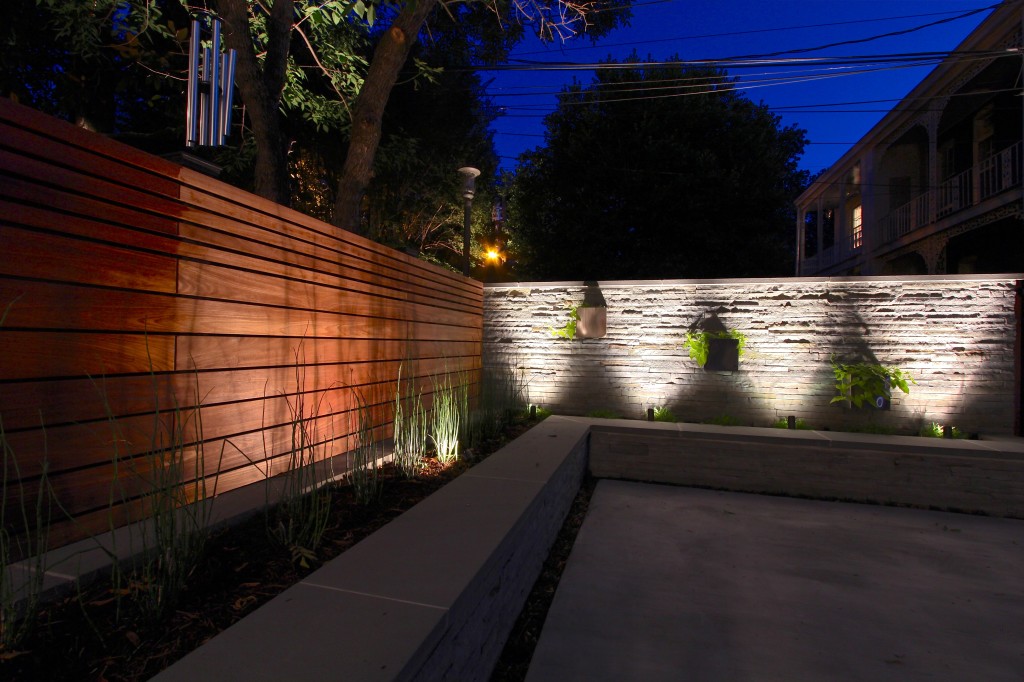
Low-glare guidance for steps, decks, and transition points.
Subtle fixtures that improve safety without flattening the nighttime mood.
Weather-conscious specification for exposed Colorado exterior conditions.
Easy pairing with walkway, hardscape, and architectural lighting systems.
Colorado Planning
Homeowners comparing fixture types usually start with the Colorado lighting services hub to understand how this category fits the property, then review Front Range service areas and request a Colorado lighting consultation once the layout priorities are clear.
If you are planning for a specific market, we also work on homes in Castle Rock, Boulder, Golden, and Arvada, where layout conditions often include slopes, retaining walls, broad patio spaces, and long evening sightlines.
Service Imagery
Warm low-level guidance for stairs, decks, and entry transitions.

Compact fixtures selected for durability and clean architectural integration.

Subtle wayfinding where grade shifts or edges become harder to read at night.
Indicator lights are intended for the points where people need guidance most: stair treads, deck perimeters, low wall edges, entry thresholds, and route transitions that can disappear after sunset. They do not replace broader area lighting, but they support it by clarifying the places where body movement and footing matter most.
That makes them especially valuable on Colorado homes with layered outdoor spaces. If a property includes multiple terraces, raised patios, side-yard steps, or uneven site conditions, indicator lighting helps the space remain usable and intuitive without relying on bright fixtures that interrupt the overall mood.
Indicator lighting works best when it is restrained. We select output levels and mounting positions that give enough visual information to guide movement while keeping the fixture itself discreet. If step lights are too bright or too numerous, they can distract from the rest of the lighting design and create an uneven, over-programmed look.
We also coordinate spacing with adjacent path lights, wall washes, and hardscape illumination so the route feels continuous. The fixture should support the experience of the space, not dominate it. That is why glare control and beam direction are just as important on these smaller fixtures as they are on larger ones.
Step lights and indicator fixtures in Colorado often live in exposed conditions. Snowmelt, ice, temperature swings, UV exposure, and moisture around masonry or deck surfaces all affect long-term performance. On wood, composite, stone, and stucco surfaces, the mounting detail has to be as well considered as the fixture itself.
We account for those conditions by selecting weather-appropriate housings, planning wire paths that stay protected, and avoiding mounting strategies that invite moisture trouble or visual clutter. On properties with foothill terrain or open exposure, this extra care helps the system stay reliable and polished year after year.
This service is commonly used on stair runs, retaining wall steps, deck perimeters, low seat walls, side-yard routes, and front entries where one or two level changes create uncertainty after dark. It is also useful around outdoor kitchens and patio connections where guests naturally move back and forth during the evening.
Indicator lights tend to work best when they are paired with walkway lighting and hardscape lighting. The indicator fixture handles the exact edge or tread, while the other services support broader circulation and surrounding atmosphere. That layered structure keeps the whole route easy to understand.
We begin with a close look at movement patterns and transition points. Which step run gets used most often? Which edge feels least clear? Where does the lighting need to support safety without turning the whole scene into a line of visible dots? Those answers shape fixture type, spacing, and output.
Once the layout is defined, we install low-voltage wiring, conceal or integrate hardware carefully, and perform final nighttime testing. Small fixtures demand precise final adjustment. When done well, indicator lights look almost effortless, but achieving that simplicity takes deliberate design and installation discipline.
Common Applications
Each project is tailored to the property, but these are the areas where we most often use this fixture category when designing Colorado lighting systems.
Clarify each tread and landing without adding harsh brightness to the whole facade.
Define transitions around entertaining zones and perimeter movement routes.
Add gentle guidance where low walls frame patios or outdoor gathering spaces.
Make narrow utility and service routes safer after dark.
Highlight subtle step-ups and threshold changes approaching the home.
Support grade changes where masonry and circulation intersect.
Installation Process
Step 1
We identify the exact steps, edges, and transitions that need low-level guidance.
Step 2
Output, finish, and mounting method are selected around the material and exposure conditions.
Step 3
Low-voltage paths are planned so the installation stays clean and serviceable.
Step 4
Indicator lights are balanced with adjacent path and hardscape fixtures.
Step 5
Final testing verifies that each transition reads clearly without looking overlit.
Why Oasis
We treat each lighting category as part of a complete outdoor composition instead of a one-off product choice. That means balancing this fixture type with circulation, architecture, planting, and the way the property is actually used at night. On Colorado homes, that usually includes patios, entries, outdoor rooms, and sightlines that remain active well after sunset.
Our team also plans for durability. Front Range lighting needs to hold up to snow, intense sun, wind, and wide temperature swings without losing its visual restraint. We select fixture strategies that feel premium, perform dependably, and stay consistent with the character of the home rather than forcing a standard template onto every property.
FAQs
Yes. Walkway lights generally guide broader paths and circulation routes, while indicator lights focus on precise transitions such as steps, deck edges, or thresholds where small visual cues matter most.
Absolutely. In fact, the best systems are subtle. You want enough information to read the edge clearly without creating visible glare or a row of distracting bright points.
Snow, ice, freeze-thaw cycles, UV exposure, and the material of the stair or deck all matter. Those factors influence both fixture selection and mounting strategy.
Related Colorado Services
Most Front Range projects combine several fixture types, so these related services help you compare how the lighting system should be layered.
Colorado walkway lighting designed for Front Range paths, entries, stairs, and outdoor circulation.
Learn more →Colorado hardscape lighting for patios, retaining walls, steps, and outdoor living areas across the Front Range.
Learn more →Colorado wall-mounted exterior lighting for entries, garages, facades, and covered outdoor areas.
Learn more →Colorado Planning Links
Use these Colorado-only routes to move from this service into regional planning, local coverage, and the next consultation step.
Start at the Colorado regional home page for local services, towns, and planning content.
Learn more →Compare fixture types and see how the full Colorado lighting cluster fits together.
Learn more →Review the Front Range towns where Oasis designs and installs lighting systems.
Learn more →Request a design conversation with the Colorado team and plan your next lighting project.
Learn more →Featured Colorado Locations
These location pages help connect this service with real property types, outdoor living patterns, and site conditions across the Colorado region.
Landscape lighting ideas for larger lots, entries, patios, and evening outdoor living in Castle Rock.
Learn more →Lighting plans for modern architecture, garden paths, and foothill-facing homes in Boulder.
Learn more →Outdoor lighting systems designed for Golden patios, stonework, and mountain-view properties.
Learn more →Residential lighting ideas for Arvada walkways, outdoor rooms, and front-entry curb appeal.
Learn more →Call (720) 953-3840 or contact the Colorado team to plan indicator lights for your Front Range property. (720) 953-3840
Contact ColoradoReady to upgrade your outdoor lighting?
Oasis Lighting Design delivers custom low-voltage landscape lighting across Huntington and Long Island, with consultation, design, installation, and ongoing service. Oasis Lighting Design is a Long Island outdoor lighting and landscape lighting company.
Premium Lighting Partners
See the brands we trust for FX Luminaire, Kichler, WAC, RAB, Sterling, and more.
From premium outdoor luminaires to smart accessories, these suppliers help us deliver reliable, high-performing custom outdoor lighting across the Island.
Pricing Guide
Review our pricing guide for design, installation, and upgrade packages.