
Discreet in-ground lighting for a cleaner daytime and nighttime result.
Colorado Lighting
Well lights are one of the most useful fixture types when a Colorado lighting design needs subtlety. Because they sit flush or nearly flush to grade, they can illuminate trees, columns, facade planes, and landscape features without adding visible fixture stems or housings to the scene. That makes them especially effective on refined properties where daytime appearance matters as much as nighttime performance.
Oasis Lighting Design uses well lights where homeowners want strong visual effect from a discreet source. On Front Range homes with mature trees, stone facades, sculptural planting, or clean architectural lines, well lights help build depth while keeping the fixture layer visually quiet.
They also require careful planning in Colorado. Grade conditions, drainage, snow, freeze-thaw cycles, and maintenance around planting beds or hardscape edges all influence how a well light should be installed if it is going to stay reliable and look intentional over time.
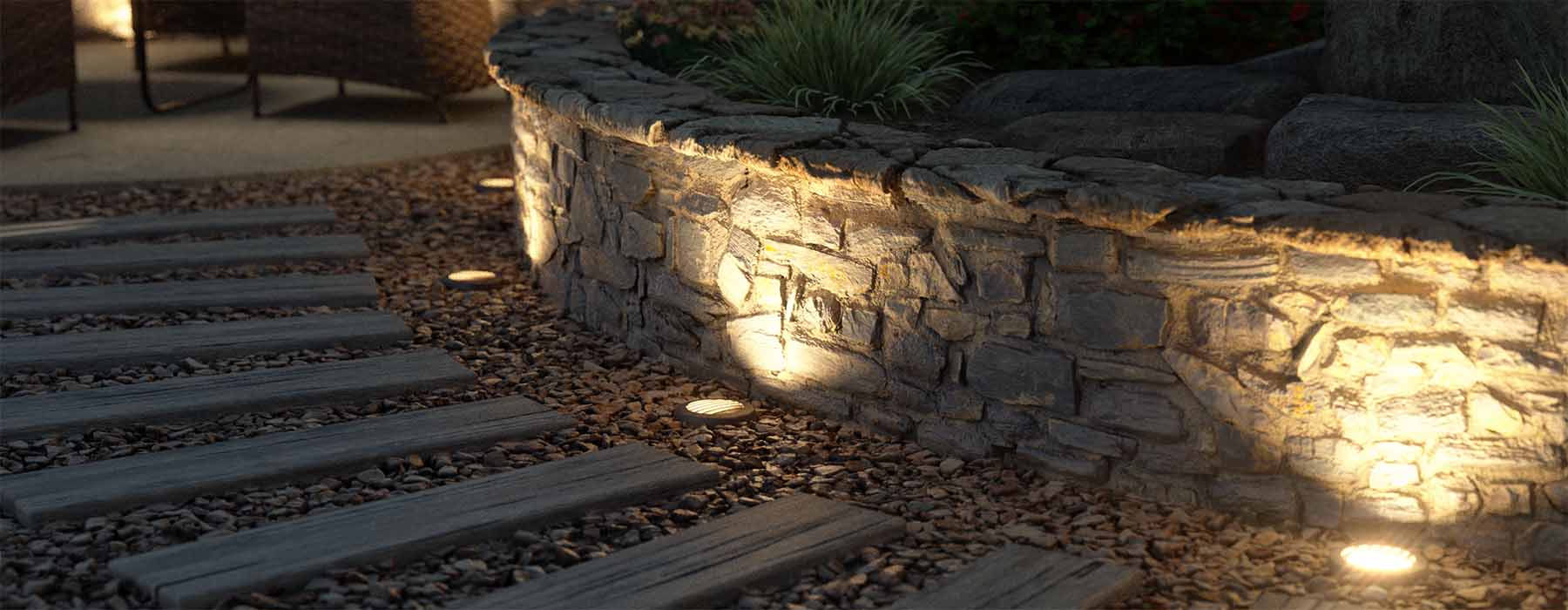
Flush or low-profile uplighting for trees, columns, walls, and key focal points.
Minimal daytime visual impact with strong nighttime architectural effect.
Drainage-aware installation for Colorado planting beds and hardscape edges.
A refined companion to spotlights, walkway lighting, and hardscape systems.
Colorado Planning
Homeowners comparing fixture types usually start with the Colorado lighting services hub to understand how this category fits the property, then review Front Range service areas and request a Colorado lighting consultation once the layout priorities are clear.
If you are planning for a specific market, we also work on homes in Castle Rock, Boulder, Golden, and Arvada, where layout conditions often include slopes, retaining walls, broad patio spaces, and long evening sightlines.
Service Imagery
Discreet in-ground lighting for a cleaner daytime and nighttime result.

A compact approach for trees, columns, and facade accents.

Strong effect from a source that stays visually quiet in the landscape.
Well lights are in-ground or near-flush fixtures used to uplight vertical elements from a concealed position. They are excellent for situations where a standard spotlight would be too visible or would interrupt the clean lines of a walkway, bed edge, or patio perimeter. Their discreet profile allows the lighting effect to take precedence over the fixture itself.
That makes them especially useful on Colorado properties with strong architecture, specimen trees, and carefully maintained planting beds. When homeowners want a premium, quiet daytime appearance, well lights often become one of the best tools for delivering that outcome.
Even though the fixture is hidden low in the landscape, the design still requires careful beam selection and aiming. A well light that is too close to the target can create harsh hotspots, while one with the wrong spread can either miss the feature or overexpose it. We plan those variables around the scale of the tree, wall, or column being lit.
Concealment also depends on the context. In a planting bed, the fixture has to remain accessible without becoming lost in mulch and growth. Near paving or architectural edges, the fixture needs to stay protected while still delivering the correct angle. Small decisions in placement make a major difference in the finished effect.
Well lights demand sound drainage planning, and that becomes even more important in Colorado where freeze-thaw cycles and snowmelt can create repeated moisture stress. If the location does not drain well, the fixture will not perform as intended over time. On sloped lots or foothill terrain, the surrounding grade can also shift how water and debris collect around the housing.
We account for those conditions by considering soil, edging, drainage paths, planting maintenance, and snow management before installation begins. That planning helps the fixture stay dependable and keeps the area around it looking clean rather than disturbed or improvised.

Well lights are commonly used for trees, facade accents, columns, boulders, sculpture, and landscape features close to paths or patios where a taller fixture would feel intrusive. They can also support retaining walls and entry architecture when a more hidden source is preferred.
They pair especially well with spotlights and walkway lighting. Spotlights can handle certain larger or more flexible aiming needs, while well lights bring subtle in-ground emphasis. Together they create a layered composition that feels sophisticated rather than repetitive.
Our process begins with identifying where a concealed source will improve the design and where a more visible fixture might actually be better. We then coordinate beam spread, location, wiring, drainage support, and transformer load so the fixtures can perform as part of the larger system.
During final aiming, we test the lighting effect at night from key sightlines around the property. Because the fixtures are tucked close to grade, small orientation adjustments can completely change the result. That precision is what turns well lights into a premium design tool instead of a generic uplighting solution.
Common Applications
Each project is tailored to the property, but these are the areas where we most often use this fixture category when designing Colorado lighting systems.
Reveal trunk structure and canopy shape with a discreet in-ground source.
Highlight columns, stone, and architectural planes without visible stems.
Add drama to focal landscape features while keeping the fixture hidden.
Use concealed uplight where a taller spotlight would interrupt circulation.
Support vertical surfaces with a tighter, lower-profile source of light.
Bring quiet emphasis to columns or flanking landscape features near the front door.
Installation Process
Step 1
We confirm which vertical elements will benefit from a concealed in-ground source.
Step 2
Site conditions are evaluated before final fixture placement is approved.
Step 3
The fixture is matched to the scale, exposure, and maintenance context of the area.
Step 4
Wiring and placement are coordinated to stay protected and unobtrusive.
Step 5
Final calibration ensures the well light contributes depth without harsh hotspots.
Why Oasis
We treat each lighting category as part of a complete outdoor composition instead of a one-off product choice. That means balancing this fixture type with circulation, architecture, planting, and the way the property is actually used at night. On Colorado homes, that usually includes patios, entries, outdoor rooms, and sightlines that remain active well after sunset.
Our team also plans for durability. Front Range lighting needs to hold up to snow, intense sun, wind, and wide temperature swings without losing its visual restraint. We select fixture strategies that feel premium, perform dependably, and stay consistent with the character of the home rather than forcing a standard template onto every property.
FAQs
No. They are best when a concealed source is important and the site conditions support proper drainage and aiming. Some features are better served by a more flexible spotlight position.
Yes, when the installation is planned correctly. Drainage, grading, and fixture selection are especially important in Colorado so the system stays reliable through snowmelt and seasonal changes.
Spotlights, walkway lighting, and hardscape lighting are common companions because they help connect concealed uplighting with circulation and architectural layers.
Related Colorado Services
Most Front Range projects combine several fixture types, so these related services help you compare how the lighting system should be layered.
Colorado spotlights and flood lights designed for Front Range homes, facades, trees, and outdoor living areas.
Learn more →Colorado walkway lighting designed for Front Range paths, entries, stairs, and outdoor circulation.
Learn more →Colorado hardscape lighting for patios, retaining walls, steps, and outdoor living areas across the Front Range.
Learn more →Colorado Planning Links
Use these Colorado-only routes to move from this service into regional planning, local coverage, and the next consultation step.
Start at the Colorado regional home page for local services, towns, and planning content.
Learn more →Compare fixture types and see how the full Colorado lighting cluster fits together.
Learn more →Review the Front Range towns where Oasis designs and installs lighting systems.
Learn more →Request a design conversation with the Colorado team and plan your next lighting project.
Learn more →Featured Colorado Locations
These location pages help connect this service with real property types, outdoor living patterns, and site conditions across the Colorado region.
Landscape lighting ideas for larger lots, entries, patios, and evening outdoor living in Castle Rock.
Learn more →Lighting plans for modern architecture, garden paths, and foothill-facing homes in Boulder.
Learn more →Outdoor lighting systems designed for Golden patios, stonework, and mountain-view properties.
Learn more →Residential lighting ideas for Arvada walkways, outdoor rooms, and front-entry curb appeal.
Learn more →Call (720) 953-3840 or contact the Colorado team to plan well lights for your Front Range property. (720) 953-3840
Contact ColoradoReady to upgrade your outdoor lighting?
Oasis Lighting Design delivers custom low-voltage landscape lighting across Huntington and Long Island, with consultation, design, installation, and ongoing service. Oasis Lighting Design is a Long Island outdoor lighting and landscape lighting company.
Premium Lighting Partners
See the brands we trust for FX Luminaire, Kichler, WAC, RAB, Sterling, and more.
From premium outdoor luminaires to smart accessories, these suppliers help us deliver reliable, high-performing custom outdoor lighting across the Island.
Pricing Guide
Review our pricing guide for design, installation, and upgrade packages.