The Best Hidden Outdoor Speakers for Backyard Parties on Long Island


Thoughtful outdoor lighting ideas, project highlights, and practical guidance for Long Island homes.
The Best Hidden Outdoor Speakers for Backyard Parties on Long Island
When homeowners search for hidden outdoor speakers for backyard parties, they are usually trying to solve two problems at once: they want strong, enjoyable sound, and they do not want speaker boxes dominating the look of their property.
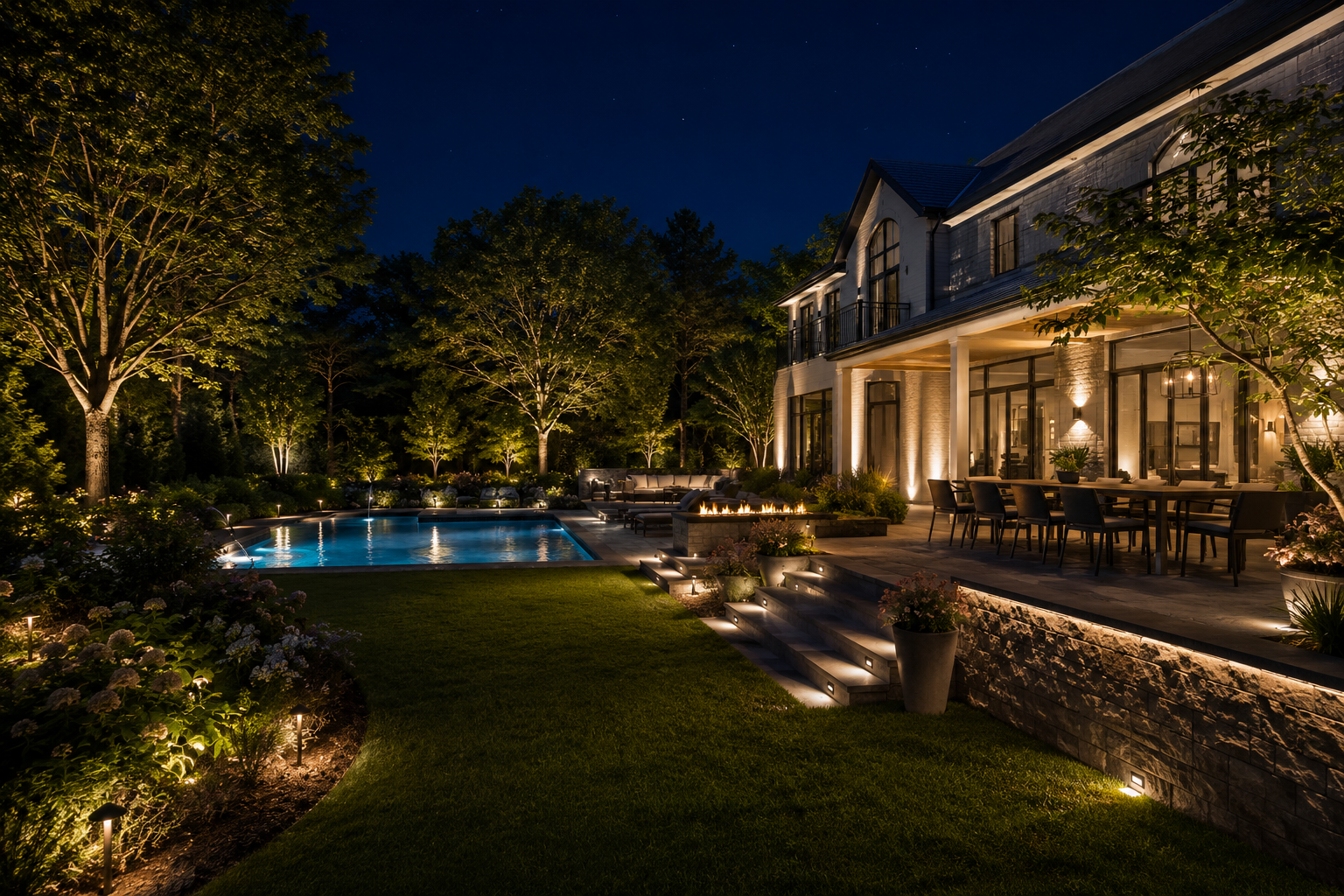
That is especially true across Long Island, where many backyards combine patios, pools, outdoor kitchens, pergolas, and landscaped zones in one connected entertaining space. In that kind of environment, a well-designed outdoor audio system is less about a single speaker choice and more about coverage design, wiring quality, amplifier planning, and smart zone control.
This guide explains how landscape speaker systems are typically planned, how outdoor speaker installation works, and what homeowners should evaluate before moving forward.
If you want a service-level overview first, start with our outdoor audio installation page and then return here for deeper planning details.
Why Homeowners Choose Hidden Outdoor Speakers
Hidden outdoor speakers are popular because they improve both aesthetics and listening comfort. Most people do not want visible speaker cabinets mounted all over the yard. They want music that feels present without calling attention to hardware.
A hidden layout usually means:
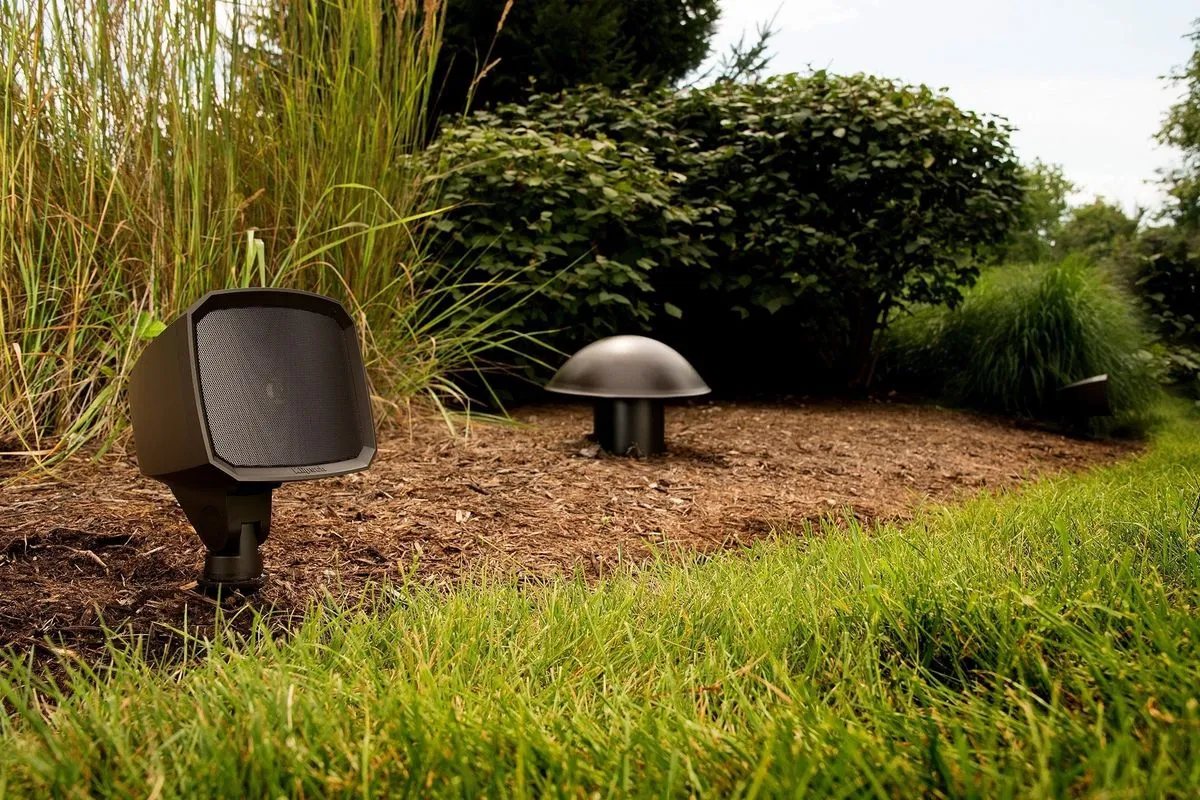
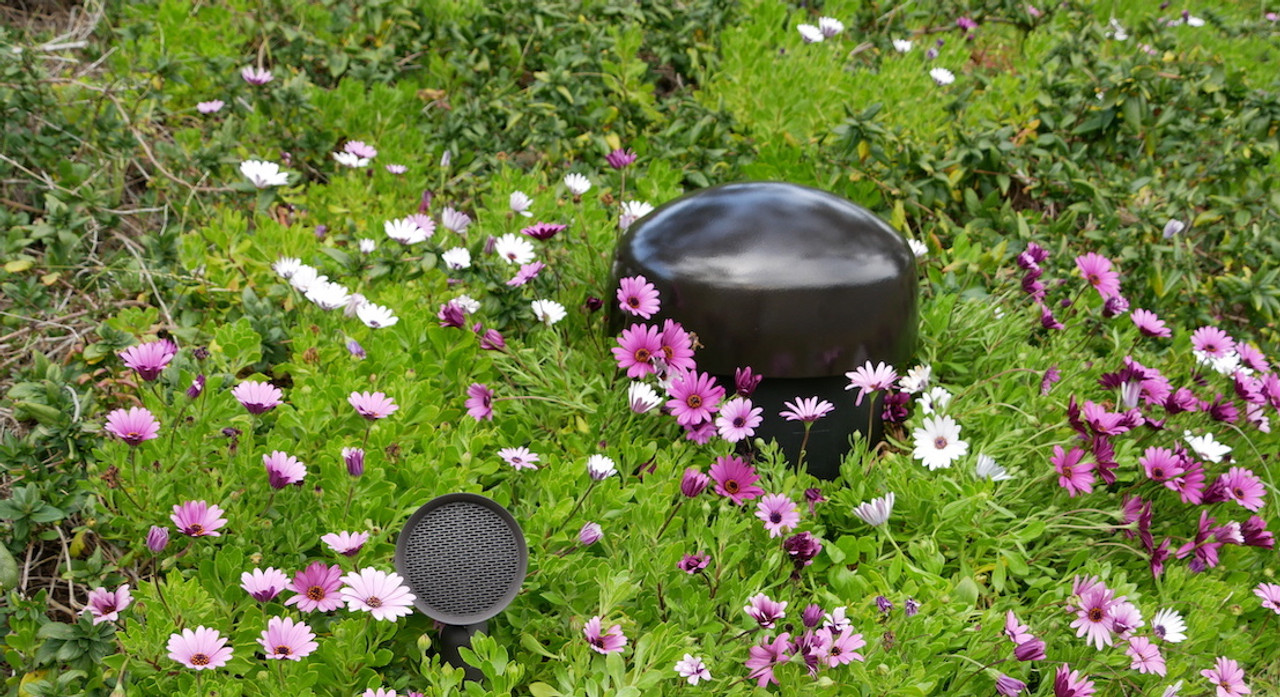
- smaller satellite speakers blended into planting beds
- in-ground or low-profile subwoofers integrated into landscaping
- carefully distributed speaker positions instead of one loud source
- cleaner views from patios, windows, and pool seating areas
This approach often performs better for backyard parties because coverage is spread across the space. Guests can talk comfortably while music remains clear. With a traditional exposed pair mounted at one end of the yard, the near seats can feel too loud while far areas feel thin.
For homeowners already planning masonry, lighting, and entertaining upgrades, hidden audio is often coordinated with broader outdoor living projects on Long Island.
Landscape Speakers vs Traditional Outdoor Speakers
Both options can work. The better choice depends on yard size, architecture, and how you entertain.
Traditional outdoor speakers:
- usually mounted on walls, eaves, pergolas, or posts
- can be effective for small patios and focused seating areas
- may become visually prominent on high-end landscapes
- can create hot spots if coverage is not distributed
Landscape speaker systems:
- use multiple low-profile speakers around the property
- typically include one or more buried/hidden subwoofers
- create more even sound across pathways, lawn edges, patios, and pool perimeters
- generally reduce the need to run one area at excessive volume
For many backyard speaker systems, landscape layouts are easier to scale. You can create independent zones for patio dining, pool lounging, and fire pit gatherings without forcing one speaker style to do everything.
How Hidden Speaker Systems Are Installed
Outdoor speaker installation is mostly a planning exercise before any trenching begins. The visible hardware is only one piece of the system.
A typical process includes:
- Site walkthrough and listening goals: define where people gather, where lower-volume conversation matters, and where party-level output may be needed.
- Coverage design: map speaker and subwoofer positions for even coverage, not isolated loud points.
- Cable routing strategy: plan direct-burial runs and entry points to minimize disruption to existing landscaping and hardscape.
- Amplifier and load planning: confirm impedance and channel loading to avoid underpowering or overdriving zones.
- Installation and concealment: route cables, weather-seal terminations, mount or bury components, and protect transitions near high-traffic paths.
- Tuning and handover: set gain structure, zone levels, and control defaults for daily use and party use.
Good installation is about repeatable performance. Systems should still sound balanced months later, not just on day one.
For homeowners comparing options, our legacy exterior audio page also shows category-level speaker types and use cases.
Best Areas for Outdoor Audio
Backyard layouts on Long Island are rarely one-dimensional. The most successful systems treat each area as a listening context.
Patios
Patios usually need conversational clarity at moderate volume. This zone often benefits from distributed speakers aimed to avoid direct on-axis blast at seated guests. The goal is comfortable coverage for dinner and social use.
Pools
Pool audio zones need careful placement because of reflected surfaces, movement patterns, and varying listener distance. Coverage should reach loungers and shallow-deck seating without becoming overly bright at one edge.
Outdoor Kitchens
Outdoor kitchens are task-oriented and social. Speaker placement should support prep areas without forcing louder zones onto adjacent seating. Many homes benefit from an independent kitchen zone with quick volume presets.
Fire Pits
Fire pit zones usually work best with subtle, surrounding sound rather than directional output from one side. Distributed coverage helps maintain atmosphere and conversation around the circle.
Pergolas
Pergolas can support mounted, surface, or hybrid speaker layouts. Overhead structure often makes cable routing easier, but sound still needs to blend with nearby open areas rather than feeling isolated.
How Many Outdoor Speakers Do You Need?
There is no single number that fits every project. Speaker count should follow coverage goals and zone boundaries.
A practical framework:
- small patio-only zone: fewer speakers, tighter coverage
- medium backyard with two activity areas: distributed layout with zone balancing
- large entertaining property: multiple zones with dedicated sub support and control logic
The biggest mistake is sizing by “loud enough at one spot.” Better systems are sized for consistent listening across where people actually stand, sit, and move.
If your property already includes layered night-use features, audio planning should be coordinated with your landscape lighting design on Long Island so both systems support the same pathways and gathering zones.
Sonos, Amplifiers, and Multi-Zone Audio Systems
Many homeowners ask about Sonos-based control. Sonos Amp can be an excellent fit when the electrical load and zone architecture are planned correctly.
What matters most is not the logo on the app. It is system design:
- impedance compatibility across connected speakers
- realistic amplifier headroom for each zone
- wiring topology that supports future expansion
- control logic for party mode vs everyday mode
Multi-zone audio is often the key differentiator for entertaining-focused homes. It allows you to run patio music at low level while maintaining stronger output near the pool during events. It also supports quiet late-night use without rebuilding the system.
When amplifier and zone planning are rushed, homeowners usually notice it as inconsistency: one area is too loud, another is too quiet, and turning up volume creates fatigue instead of better sound.
Common Outdoor Audio Installation Mistakes
Most problems are preventable with better planning.
1. Treating the yard like one single zone
Backyards with patios, pools, kitchens, and fire features need zone-aware design. One-source layouts create uneven results.
2. Prioritizing speaker count over coverage geometry
More speakers are not automatically better. Placement, aiming, and spacing matter more than raw count.
3. Ignoring wiring quality
Outdoor speaker wiring needs proper gauge selection, weather-rated terminations, and route planning that avoids avoidable strain and moisture risk.
4. Skipping impedance and amplifier checks
Mismatched loads can reduce output quality or stress the amp. Load planning should be done before final hardware selection.
5. No commissioning/tuning step
Installation without tuning leads to avoidable hot spots, poor tonal balance, and weak transition between zones.
6. Designing for “max party volume” only
Daily use matters. Systems should sound good at low and medium volume, not just when pushed.
Outdoor Audio Design for Long Island Backyards
Long Island properties present specific design realities: coastal exposure, seasonal use patterns, mixed hardscape/planting layouts, and tight transitions between quiet neighborhood conditions and active entertaining spaces.
A professional outdoor audio design strategy should address:
- weather-rated equipment selection for local conditions
- realistic zone boundaries based on how the property is used
- hidden-speaker integration that respects landscaping and architecture
- serviceability for future upgrades
- practical control for homeowners and guests
Homeowners often search “outdoor speakers Long Island” or “outdoor sound system near me” when they are early in planning. The highest-value next step is usually a property-specific design conversation, not a generic package list.
For service details and consultation options, use:
- Outdoor Audio Systems & Installation
- Exterior Audio Service Overview
- Outdoor Living Long Island
- Landscape Lighting Long Island
Frequently Asked Questions
Are hidden outdoor speakers worth it?
In most entertaining-focused backyards, yes. Hidden layouts usually provide better coverage with less visual distraction. The system feels integrated into the property instead of added on afterward.
How long do outdoor speakers last?
Lifespan depends on equipment quality, exposure conditions, and installation discipline. Weather-rated speakers with proper wiring and sealed connections often perform for many years.
Can Sonos power outdoor speakers?
Yes, in many scenarios. Sonos Amp can be effective when speaker load and zone design are planned correctly. Larger properties may require additional amplification to maintain consistent performance.
Are buried landscape speakers waterproof?
They are built for outdoor exposure, but performance depends on installation quality. Drainage awareness, correct placement, and sealed terminations are essential for long-term reliability.
How many speakers do I need around a pool?
Pool layouts vary. Most projects are designed around distributed coverage, deck shape, seating placement, and whether audio should extend into nearby patios or kitchens.
Request an Outdoor Audio Design Consultation
If you are planning hidden outdoor speakers for a Long Island entertaining space, the most useful starting point is a zone-based design review: coverage map, speaker placement strategy, wiring approach, and amplifier/control recommendations tailored to your property.